Cold chain logistics is the system that keeps temperature-sensitive products — food, flowers, pharmaceuticals and more — within a safe temperature range from the moment they’re produced or stored to the moment they reach the customer. Break that chain anywhere along the route, and the product can spoil, lose effectiveness or become unsafe, no matter how well it was handled everywhere else.
“Cold chain” refers to an unbroken sequence of temperature-controlled storage and transport steps. A product might move from a cold storage facility, onto a refrigerated van or truck, through a cross-dock or distribution point, and finally to a store, restaurant, clinic or customer’s door — and at every one of those steps, the temperature has to stay within the range that product requires.
It’s called a “chain” because it only takes one weak link — a van without proper insulation, a warehouse door left open too long, a delivery that sits in the sun — to compromise the entire journey, even if every other step was handled correctly.
For food businesses, an intact cold chain is the difference between fresh, sellable stock and spoiled waste. For pharmaceutical and healthcare products, it can be the difference between an effective vaccine and one that no longer works as intended. For any temperature-sensitive business, it also protects reputation — customers and partners notice when deliveries arrive warm, wilted or compromised.
A working cold chain typically combines four elements:
Warehouses, cold rooms or facilities that hold products at the required temperature before they move — the starting point of the chain.
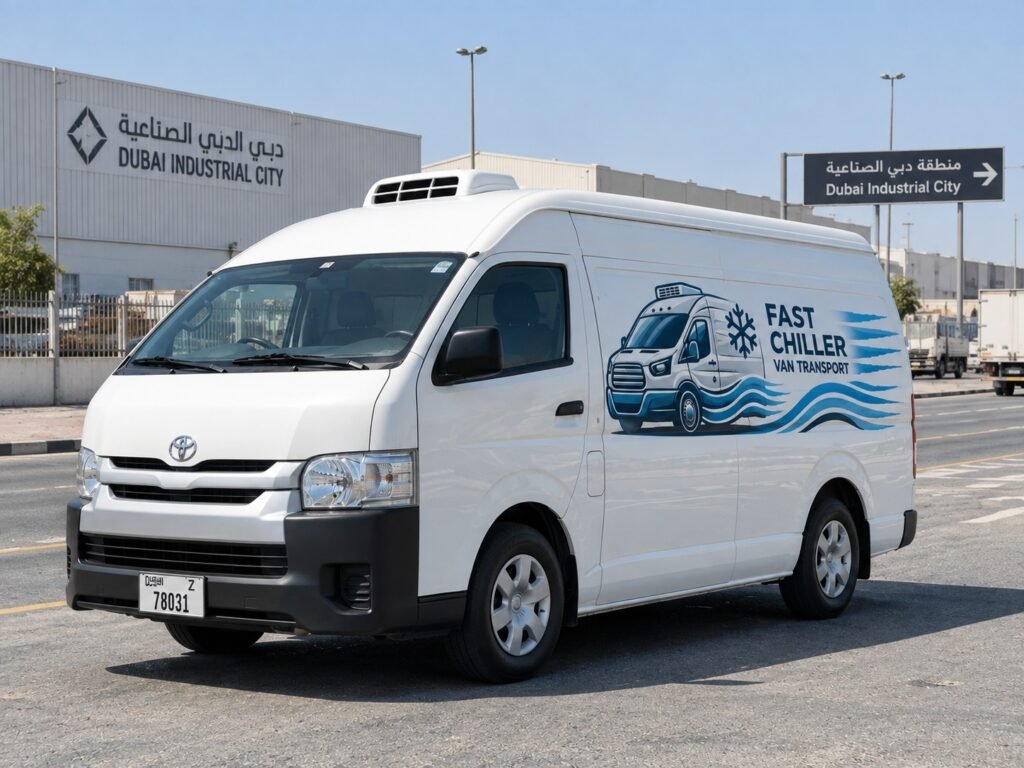
Insulated chiller, freezer or multi-temp vans and trucks that carry the product between points, holding temperature despite outside heat, traffic and stop-and-start driving.
How cargo is loaded, sequenced and handed over — minimising the time doors stay open and the time products spend outside controlled conditions.
Tracking the actual temperature a product experiences throughout its journey, so any deviation is visible rather than discovered only after the product has already been compromised.
| Category | Typical range | Examples |
|---|---|---|
| Chilled | 0 → +8°C | Dairy, fresh produce, beverages, flowers, catering |
| Frozen | –18 → –25°C | Meat, seafood, ice cream, frozen ready meals |
| Pharma refrigerated | 2 → +8°C | Vaccines, insulin, many medicines |
| Controlled ambient | 15 → 25°C | Certain medicines, some clinical samples |
Some products — like a mixed grocery order with both chilled and frozen items — need more than one temperature zone on the same trip, which is where multi-temp vehicles come in.
Running a cold chain in the UAE means designing around extreme heat, not around it as an occasional edge case. With outside temperatures regularly passing 45°C for months at a time, equipment and procedures that work fine in milder climates can fail here — a van that holds temperature on a mild morning may lose it entirely in a 48°C afternoon stuck in traffic.
That’s the standard Fast Chiller Van Transport builds around: chiller, freezer and multi-temp vehicles specified to hold temperature through Gulf summers, with real-time monitoring and trained drivers, dispatched 24/7 across all seven emirates.
Zabit Khan
Founder & CEO, Fast Chiller Van Transport
Still have a question? Talk to our team.
Cold chain logistics is the temperature-controlled supply chain that keeps perishable goods like food and medicine cool from storage to delivery.
The main stages are pre-cooling, cold storage, refrigerated transport, distribution, and last-mile delivery.
Each stage must maintain the required temperature to prevent spoilage.
Cold chain logistics uses Chilled 0°C to +8°C, Pharma +2°C to +8°C, Ambient +15°C to +25°C, Frozen -18°C to -25°C, and Deep-Frozen below -20°C.
Cold chain logistics is harder in the UAE due to extreme 40°C–50°C heat, high energy costs, and reliance on long import routes that increase spoilage risk.
If the cold chain breaks, products spoil, lose quality and safety, and can become unsafe to use — leading to waste and financial loss.
Fast Chiller Van Transport supports the cold chain by delivering temperature-sensitive goods in refrigerated vans that maintain set temperatures from pickup to delivery.
A trusted UAE provider of chiller vans, freezer vans, and refrigerated trucks. We specialize in cold-chain logistics that keeps your goods fresh, safe, and on time.
Copyright © Fast Chiller Van Transport. All Rights Reserved. Designed and Ranked by MindGigs
WhatsApp Us